
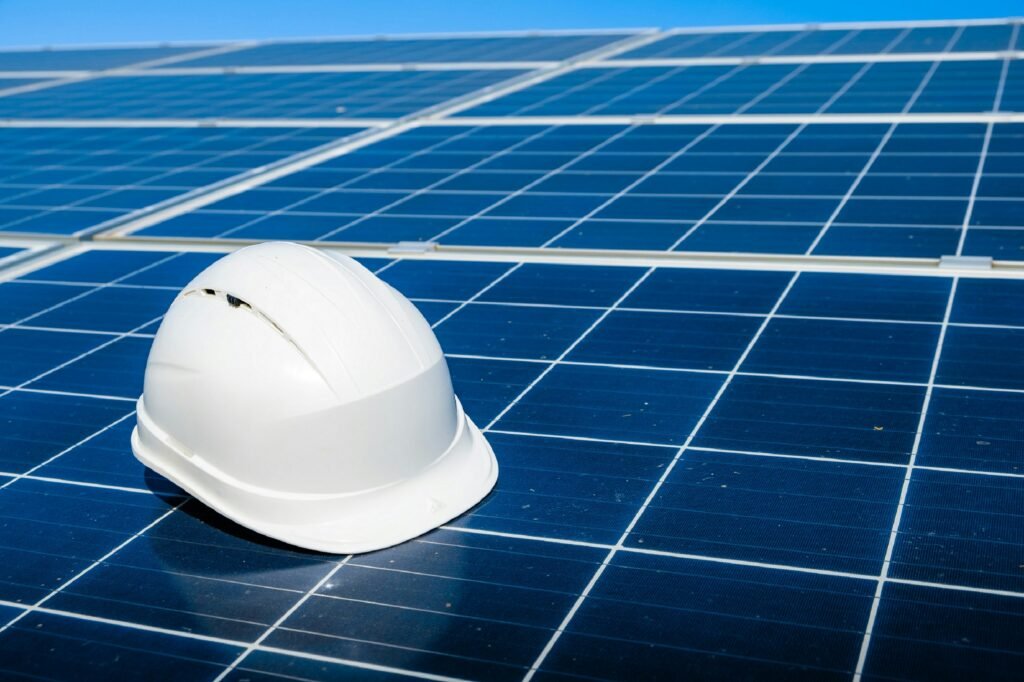
Solar energy has become one of the most popular renewable energy sources in the world. Whether you’re planning to install solar at home or just want to understand how it works, this guide explains solar panels, inverters, batteries, MPPT, and net metering in the simplest way.
Table of Contents
1. What Is Solar Energy?
Solar energy is the power we get from the sun’s radiation. Solar panels convert this light into usable electricity, making it one of the cleanest and most cost-effective sources of power.
2. How Does a Solar Panel Work?
Solar panels are made of Photovoltaic (PV) cells, mainly made of silicon. When sunlight hits these cells, Photons strike the PV cells and electrons get excited; then an electric current starts to flow. This process is called the Photovoltaic Effect. Solar panels use this photovoltaic effect.
Refer to This Video to See How a solar energy works (URL- https://youtu.be/xKxrkht7CpY)
Types of Solar Panels
- Monocrystalline – Highest efficiency, expensive
- Polycrystalline – Medium cost, medium efficiency
- Thin Film – Cheaper, lower efficiency
3. Components of a Solar Power System
A. Solar Panels (PV Modules)
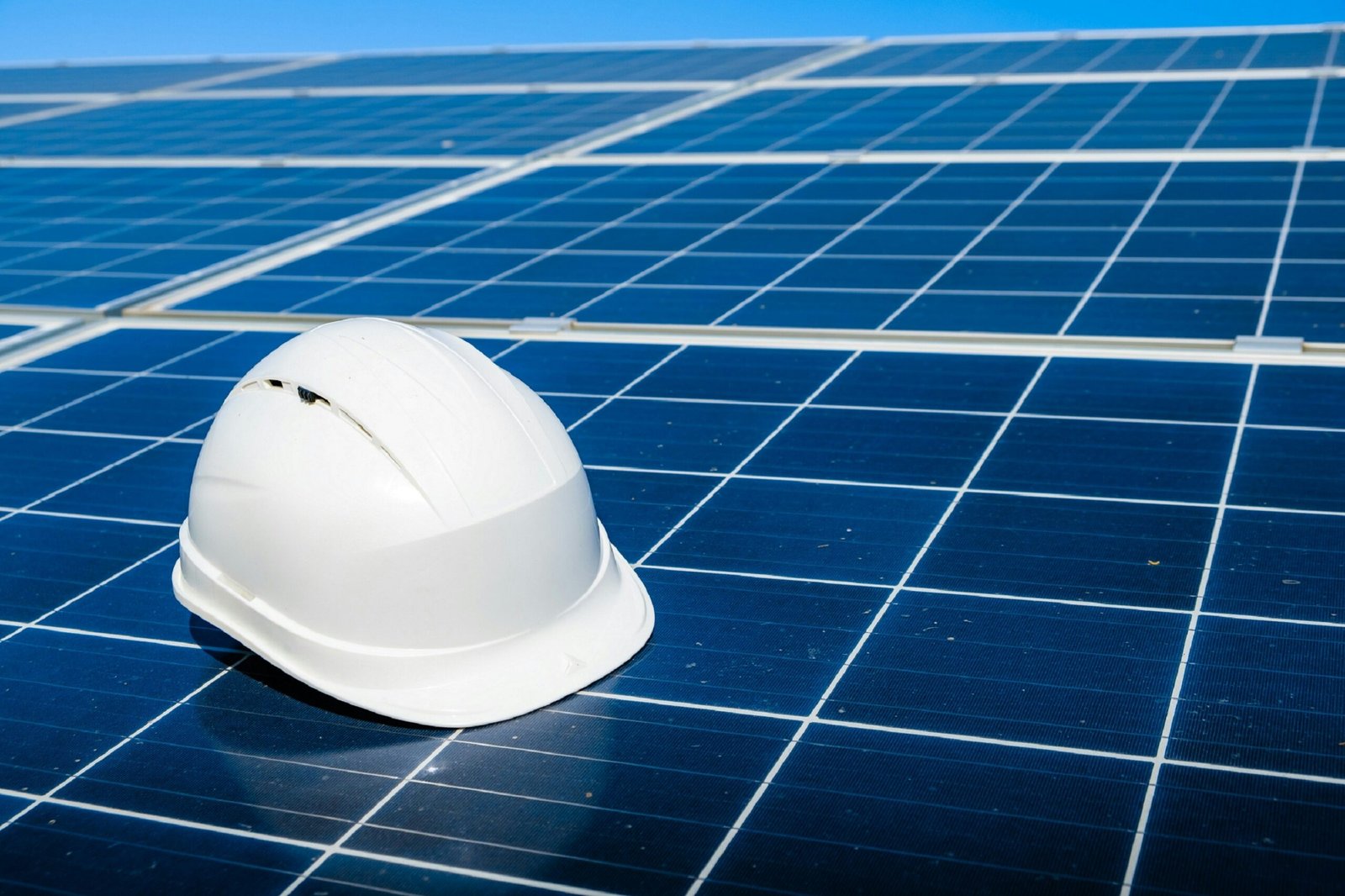
The photovoltaic modules, or solar panels, form the basis of every solar power system that converts sunlight to electrical energy directly. They consist of a large number of individual solar cells, usually silicon-based, that generate DC electricity upon light exposure.
B. Solar Inverter
Solar panels make only DC electricity. But in day-to-day life, we don’t use DC electricity, so we should change it to AC. That’s why we need solar inverters. The inverter converts DC electricity to AC electricity, so your home appliances can use the power. There are a few types of inverters,
Types of solar inverters:
- String inverter – Converts the direct current (DC) from a series of solar panels (a “string”) into alternating current (AC) for the grid.
- Micro-inverter – A small inverter attached to each individual solar panel, converting DC to AC right at the source.
- Hybrid inverter – An intelligent inverter that can manage solar panels, a battery storage system, and the grid all in one unit. It can operate on-grid and off-grid.
C. Solar Battery (Optional)
Solar panels can only generate power during only day or only time that we have sunlight. Because of that, we need a battery to store excess power. They store excess energy for nighttime use or later time.
Common battery types:
- Lead-acid
- Lithium-ion (most efficient)
D. Charge Controller (MPPT / PWM)
It’s a crucial device that prevents overcharging and resultant damage by regulating the power inflow from solar panels to a battery bank. The two major types are PWM, which stands for Pulse Width Modulation-a somewhat simpler, cheaper method-and MPPT, which represents Maximum Power Point Tracking, a more sophisticated technology that extracts the utmost possible power from the panels.
4. What Is MPPT? (Maximum Power Point Tracking)
MPPT ensures the solar panel always operates at the maximum efficiency point, even if:
- sunlight changes
- temperature changes
- shading occurs
MPPT can increase energy generation by 20–30% compared to PWM controllers.
5. How a Home Solar System Works
Here’s the basic flow of a grid-connected solar system:
- Solar panels generate DC power
- Inverter converts DC to AC power
- Home uses the solar energy
- Extra energy is sent to the grid through net metering
- At night, electricity comes from the grid
6. What Is Net Metering?
Net metering is the billing arrangement with your utility company for solar or renewable energy systems. It allows you to send excess electricity generated from your system back to the grid in exchange for credits. These credits are then used to offset the cost of the electricity you are drawing from the grid at night or during low production, reducing your overall bill.
How it works:
- Your meter records both import (from grid) and export (to grid) energy
- At the end of the month, the bill is calculated based on net usage
👉 If you export more energy, you get credit or reduced electricity bill.
7. On-Grid vs Off-Grid Solar Systems
✔ On-Grid System (Most Common)
The most common solar setup is an on-grid or grid-tied system, which is directly connected to the public electricity grid. It utilizes solar power during the day and automatically draws power from the grid when it cannot produce enough from solar energy, without needing any form of battery storage. In this system, the backup depends on the grid, and it is ideal to reduce your electricity bill because of net metering. However, when there is a grid power outage, it shuts down for safety reasons.
- No batteries
- Connected to the national grid
- Uses net metering
- Low cost
✔ Off-Grid System
Designed for remote areas or complete energy self-sufficiency, an off-grid system runs entirely independently of the public electricity grid. Solar panels, a sizable battery bank for energy storage, and a backup generator to supply power during protracted bad weather are all necessary. This system offers complete energy independence but has a higher upfront cost and requires careful management of energy consumption.
- Has batteries
- Works without grid
- Used in remote areas
- Higher cost due to batteries
✔ Hybrid System
A hybrid system connects to the grid and incorporates a battery bank for storage, combining the advantages of on-grid and off-grid systems. It cleverly uses solar energy to power the house and charge the batteries, exports excess energy to the grid for credits, and can supply backup power when the grid goes down. This configuration is becoming more and more popular because it provides the best of both worlds: protection from power outages and bill savings through net metering.
- Grid + Battery
- Stores energy and works during power cuts
8. How Much Energy Can Solar Panels Generate?
Average efficiency: 15–22%
1 kW solar system produces:
➡ 4–5 units/day
➡ 120–150 units/month
Factors affecting generation:
- Sunlight level
- Panel direction (south-facing ideal)
- Temperature
- Cleanliness of panels
9. Benefits of Solar Energy
- Zero fuel cost
- Clean & renewable
- Lower electricity bill
- Low maintenance
- Long lifespan (25+ years)
10. Conclusion
Solar energy is a smart investment for homes and businesses.
If you understand the basics—PV cells, inverters, MPPT, batteries, and net metering—you can choose the right solar system that fits your needs and budget.