

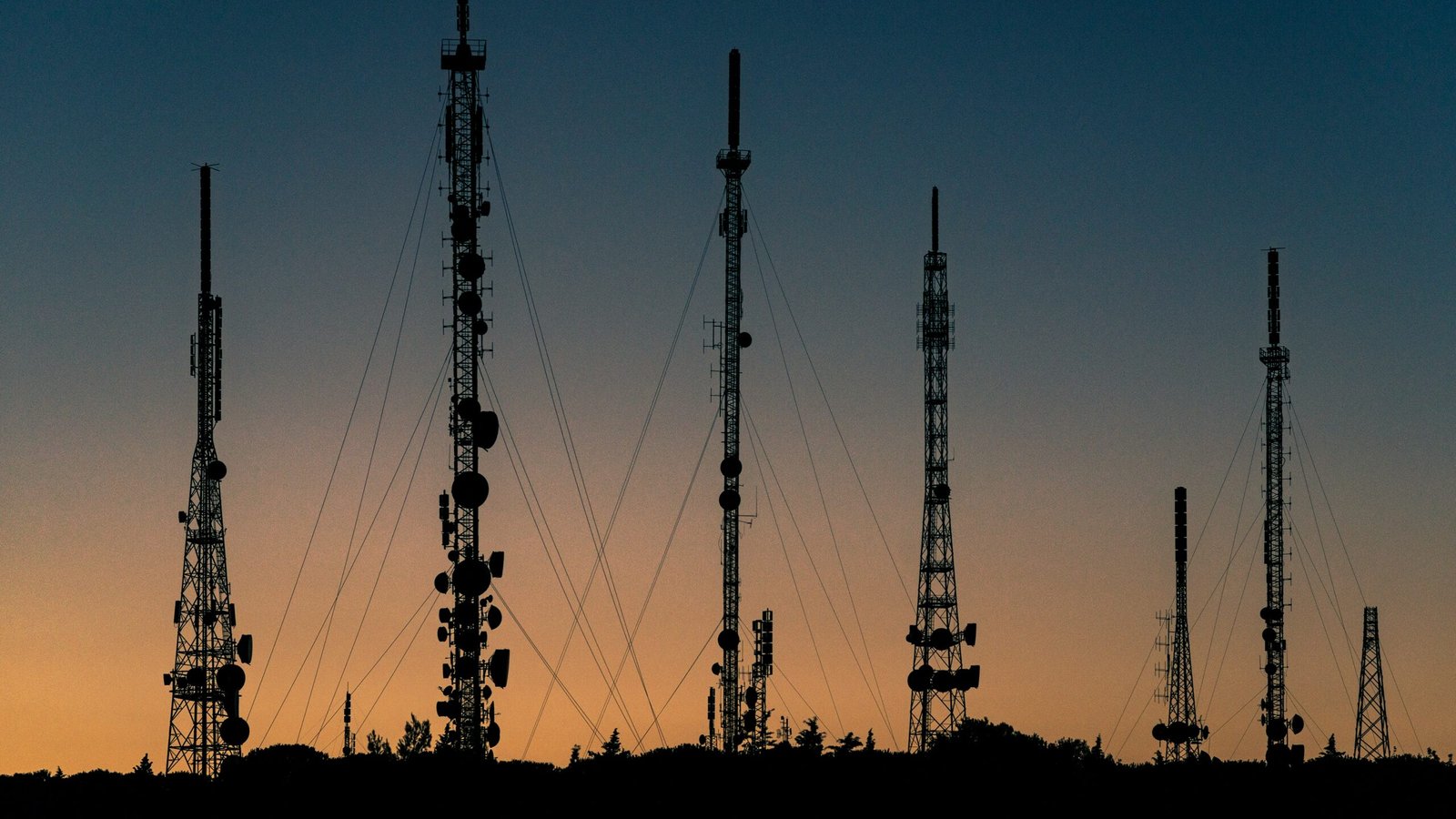
Telecommunication engineering is everywhere around us. From the smartphone in your hand to the internet that connects the world, telecommunication engineers make modern communication possible. This field focuses on designing, building, and maintaining systems that transmit information over distances. Whether you are a student trying to understand the basics or an aspiring engineer planning a career, this guide will help you understand what telecommunication engineering is all about. By the end, you will know the key concepts, technologies, tools, and career paths in this exciting field.
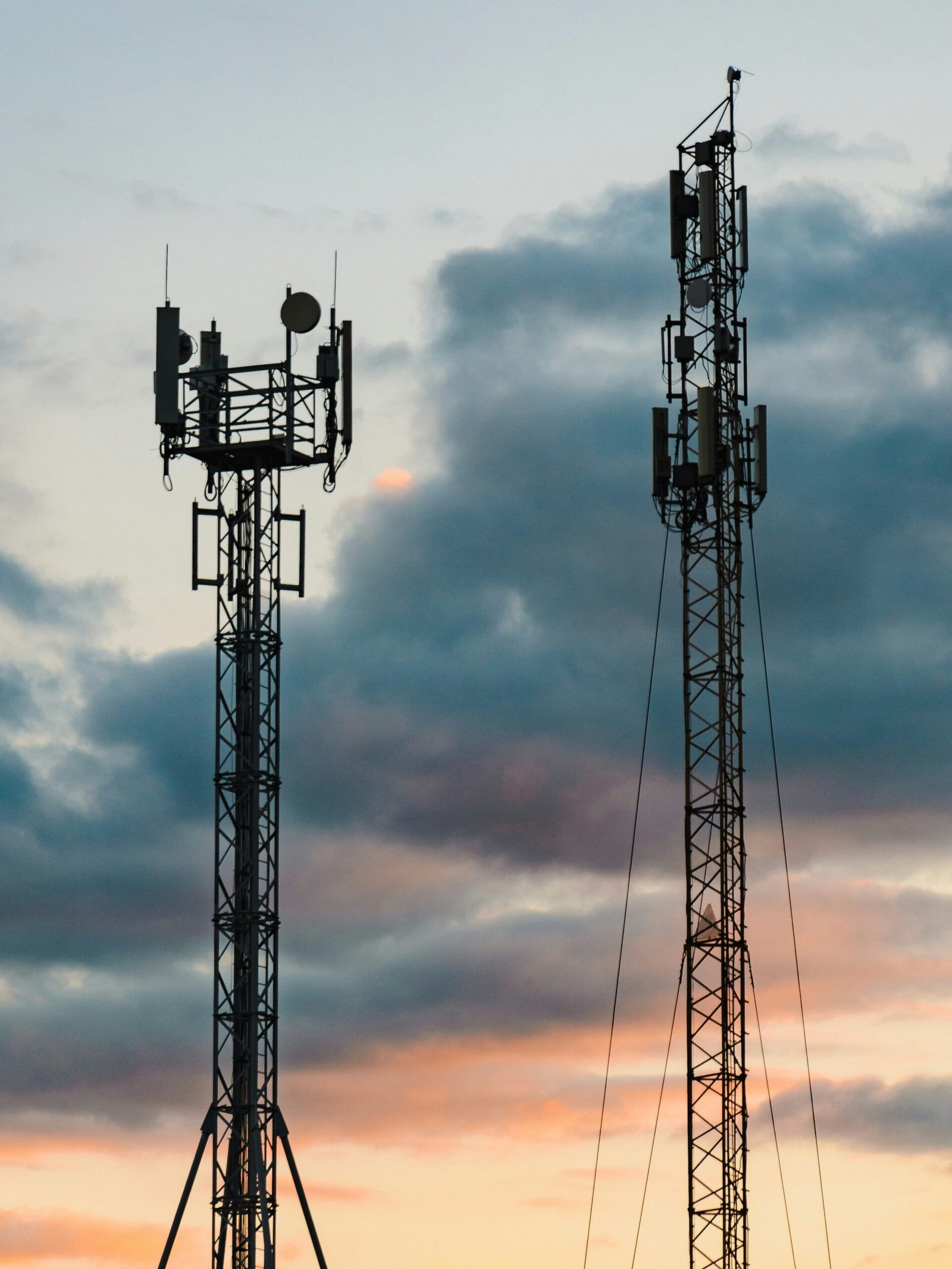
Table of Contents
History and Evolution of Telecommunication
Communication has come a long way. Long before smartphones and 5G, people used telegraphs and telephones to send messages. Then came radio and television, allowing people to send audio and video signals across cities and countries. Mobile networks changed everything, first with 2G and 3G, and then 4G LTE. Today, 5G networks are rolling out, offering faster speeds and low latency. In the near future, we may even see 6G and more satellite-based communication systems that connect remote areas.
Core Concepts in Telecommunication Engineering
At the heart of telecommunication engineering are signals. These signals carry information, and they can be analog or digital. Analog signals are continuous, like a voice wave, while digital signals use zeros and ones to represent data. Modulation is a way to change a signal so it can travel long distances without losing quality. For example, AM and FM radio use modulation techniques. Transmission media, like copper wires, fiber optics, and wireless systems, carry these signals from one place to another. Multiplexing allows multiple signals to share the same channel, which makes communication more efficient. And if you are curious about antennas, they are essential for sending and receiving wireless signals, forming the backbone of modern networks.
Telecommunication Network Architecture
Networks are like the roads for information. The core network is the main highway where most data travels, while the access network connects devices like phones and computers to this highway. Cellular networks have a specific structure: Base Transceiver Stations (BTS) communicate with mobile devices, Base Station Controllers (BSC) manage multiple BTSs, and the Mobile Switching Center (MSC) directs calls and data. Some networks are packet-switched, like the internet, while others are circuit-switched, like traditional phone networks. Modern networks also use protocols like IP and LTE, and cloud-based systems and software-defined networking are becoming more common, making networks faster and more flexible.
Key Technologies in Modern Telecommunication
Today, the technology in telecommunication is moving fast. 4G LTE brought fast mobile internet, but 5G is a game-changer with higher speeds and very low delays. The Internet of Things (IoT) connects devices like smart meters and wearable gadgets, sending and receiving data constantly. Satellite communication allows remote areas to stay connected, and fiber optics carry large amounts of data with very little delay. Security is also important because all this data needs protection from hackers. Together, these technologies make modern communication reliable, fast, and everywhere.
Understanding the Differences Between 3G, 4G, and 5G
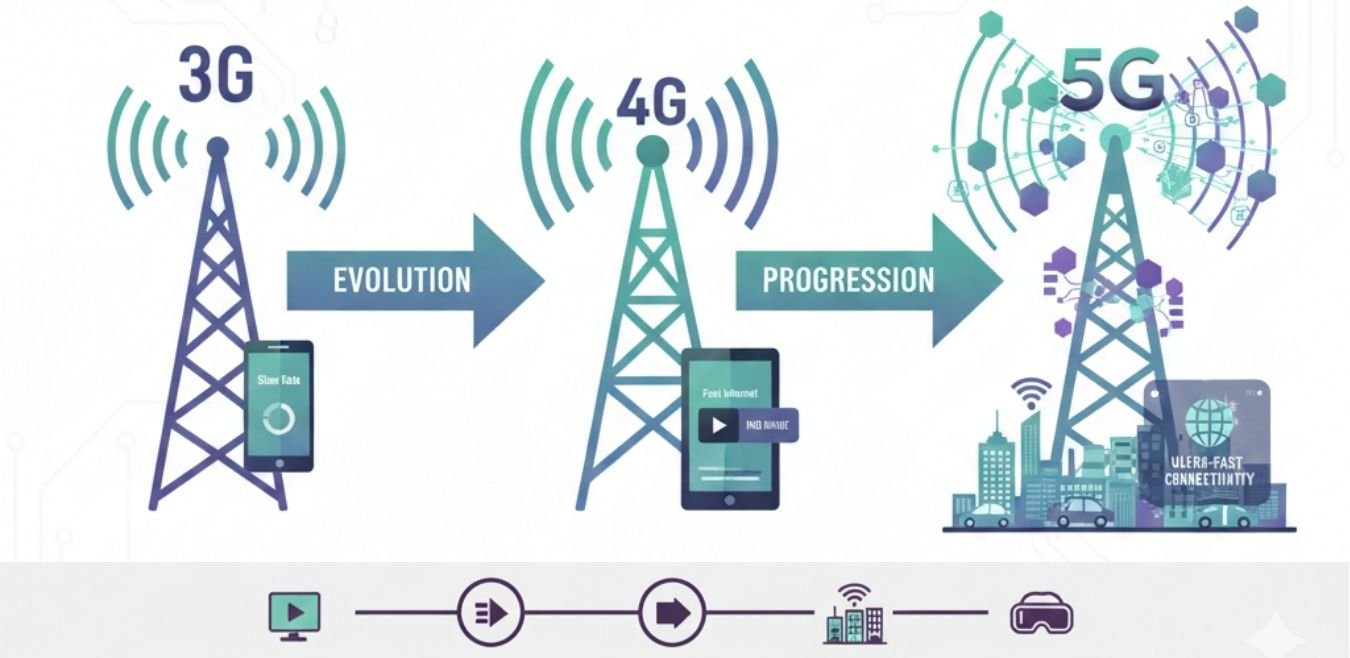
Mobile networks have improved a lot over the years. Each generation, from 3G to 5G, brought faster speeds and better technology. 3G was a big step because it allowed mobile internet and video calls, but the speed was limited. 4G made everything faster and smoother, enabling high-definition video streaming and better apps. Now, 5G is the latest technology, offering lightning-fast speeds, low delay, and the ability to connect many devices at once. Understanding these differences helps you see how mobile communication is evolving and what it can do for your daily life.
Key Differences Between 3G, 4G, and 5G
The main differences are in speed, latency, and the number of devices each network can support. 3G networks were mainly designed for basic mobile internet and voice calls. 4G improved data speeds and made streaming video easy. 5G takes it further with ultra-fast internet, almost no lag, and support for smart cities, IoT devices, and advanced technologies like autonomous cars. Each generation is a big step forward, making life more connected and convenient.
Comparison Table: 3G vs 4G vs 5G
| Feature | 3G | 4G | 5G |
|---|---|---|---|
| Speed | 0.5–3 Mbps | 10–100 Mbps | 1–20 Gbps |
| Latency | 100–500 ms | 30–50 ms | 1–10 ms |
| Main Use | Basic mobile internet, calls | HD video, apps, faster browsing | Smart cities, IoT, AR/VR, ultra-fast streaming |
| Connectivity | Limited devices per area | Moderate device support | Massive device support, dense networks |
| Technology | UMTS, HSPA | LTE, LTE-A | NR (New Radio), mmWave, Massive MIMO |
Tools and Software Used in Telecommunication Engineering
Telecommunication engineers use many tools to design and test networks. MATLAB helps with simulations of signals and networks. NS3 and OPNET are used to simulate and analyze network behavior. Cisco Packet Tracer and GNS3 are popular for learning and designing network layouts. For RF engineers, tools like Atoll and TEMS help plan network coverage, and spectrum analyzers check signal quality. Signal generators create test signals for experiments. These tools allow engineers to test ideas safely before deploying them in the real world.
Career Opportunities and Skill Requirements
You are offers a variety of career paths. You could become a network engineer, RF engineer, IoT engineer, or telecom analyst. Certifications like CCNA, CCNP, and 5G specialist courses can help you stand out. You will need skills in signal processing, networking, programming languages like Python or MATLAB, and problem-solving. Salaries vary depending on location and experience, but the demand for skilled telecom engineers is high worldwide. If you enjoy technology and solving complex problems, this field can be very rewarding.
Challenges in Telecommunication Engineering
Telecommunication engineering is not without challenges. Technology changes quickly, so engineers must keep learning. RF and network planning are complex and require precision. Security and privacy are constant concerns, as networks carry sensitive data. Infrastructure costs, especially for fiber and 5G networks, can be very high. Despite these challenges, the field continues to grow because communication is essential in every part of life.
Tips for Beginners and Students
If you are starting out, begin with the basics. Understand signals, modulation, and networking concepts first. Then move on to simulations and practical experiments. Use online courses, books, and certifications to strengthen your skills. Participate in labs, internships, and small projects to gain hands-on experience. This approach will give you a strong foundation for a career in telecom engineering.
Conclusion and Future Outlook
Telecommunication engineering is at the core of modern communication. It connects people, devices, and systems around the world. With 5G, IoT, and future technologies like 6G and advanced satellites, the field will continue to expand. Learning and practicing telecommunication engineering can open doors to exciting careers. Whether you are a student or a professional, understanding the basics and keeping up with technology trends is the key to success in this fast-moving field.
FAQs
What is telecommunication engineering?
It is the study and practice of transmitting information over distances using electrical and electronic systems.
What are the main types of communication signals?
Analog signals, which are continuous, and digital signals, which use zeros and ones.
What is the difference between 4G LTE and 5G?
5G is faster, has lower latency, and can support more devices than 4G LTE.
Which software is used in telecom engineering?
MATLAB, NS3, OPNET, Cisco Packet Tracer, GNS3, and RF planning tools like Atoll and TEMS.
What career opportunities exist in telecom engineering?
Network engineer, RF engineer, IoT engineer, telecom analyst, and many others.