
Introduction: Why Transistors Matter in Modern Technology
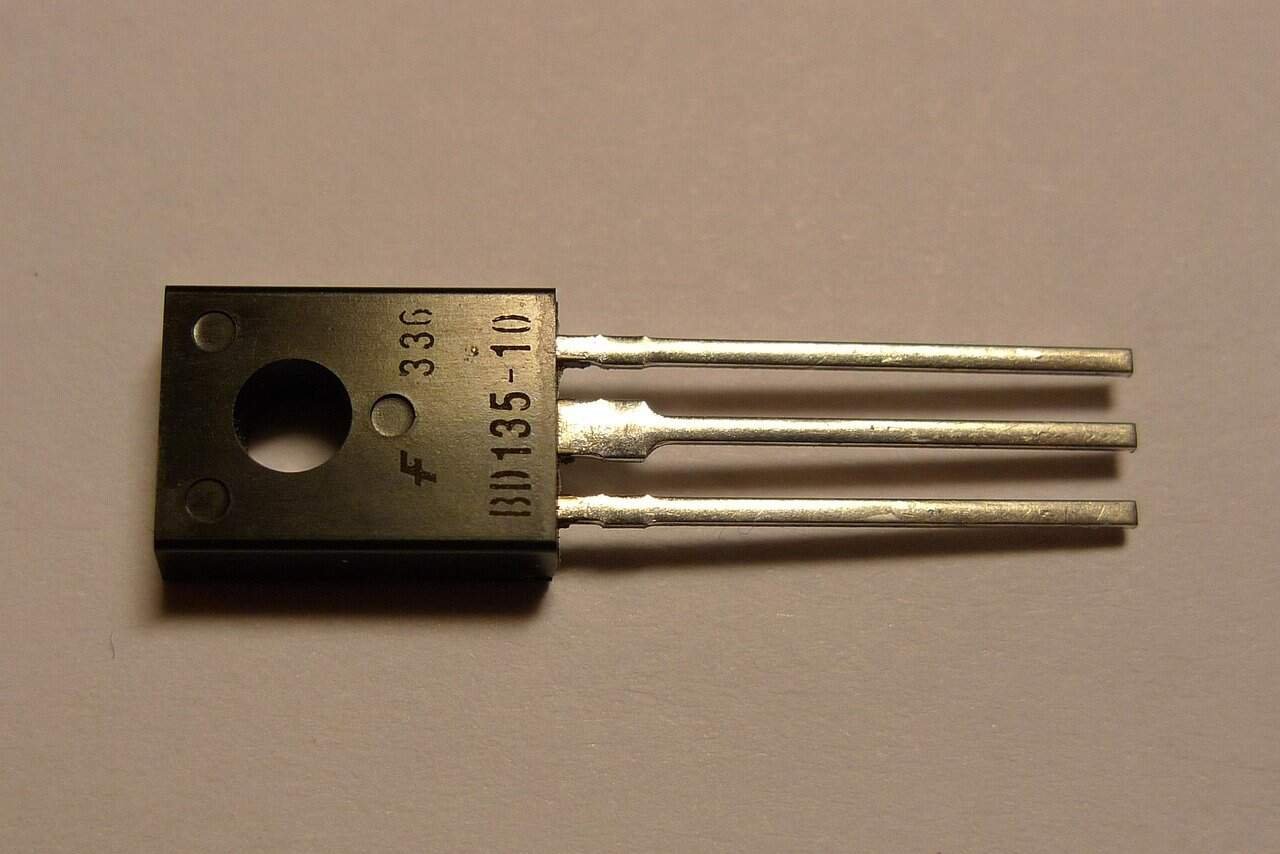
A transistor is one of the most important inventions in semiconductor technology, forming the foundation of almost every electronic device we use today. From smartphones and laptops to radios and industrial machines, transistors act as the basic building blocks of integrated circuits (ICs). In simple terms, a transistor is an electronic component that can amplify signals or act as a switch, allowing electronic systems to process information efficiently.
Understanding what a transistor is, how transistors work, and why they replaced vacuum tubes helps beginners and students grasp how modern electronics evolved. This article explains transistor basics step by step, including transistor types, working principles, applications, and future trends.
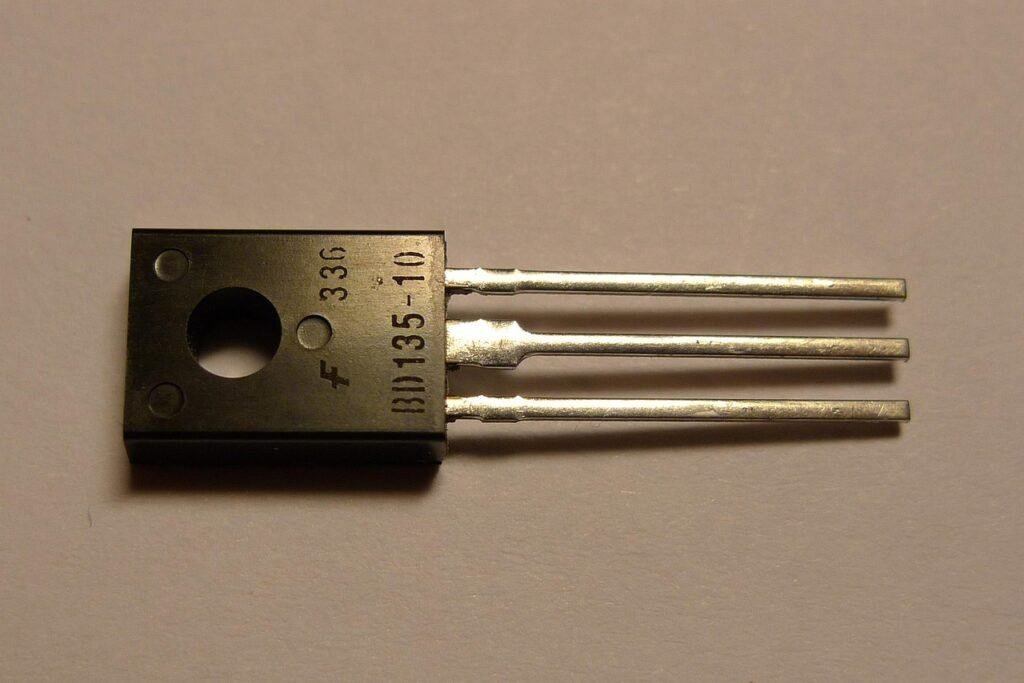
Table of Contents
Transistor History: From Vacuum Tubes to Silicon Chips
Before transistors, electronic systems relied on vacuum tubes, which were bulky, power-hungry, and unreliable. The first transistor, known as the point-contact transistor, was invented in 1947 at Bell Labs and was originally made of germanium. This invention marked a turning point in electronics history.
Later, silicon transistors became dominant due to their better thermal stability and reliability. This shift enabled the development of transistor radios, compact computers, and eventually modern CPUs. The rapid improvement in transistor density later gave rise to Moore’s Law, which predicts the doubling of transistor count on a chip every few years.
How Transistors Work (Simple Explanation)
To understand how transistors work, think of a transistor as a controlled electronic valve. A small input signal controls a much larger output current. This ability allows transistors to perform two main functions:
- Signal amplification – increasing weak signals (used in audio amplifiers).
- Electronic switching – turning circuits ON or OFF (used in digital systems).
In digital electronics, transistors operate as switches that form logic gates, enabling computers to process binary data (0s and 1s). In analog circuits, transistors amplify continuous signals like sound or sensor outputs.
Types of Transistors Explained
There are several transistor types, each designed for specific applications.
1. Bipolar Junction Transistor (BJT)
A BJT transistor uses both electrons and holes as charge carriers. The most common configurations are NPN vs PNP transistors. BJTs are widely used in transistor amplifier circuits and educational projects because of their predictable behavior.
Key uses:
- Audio amplification
- Signal processing
- Low-power analog circuits
2. Field Effect Transistor (FET)
A field effect transistor controls current using an electric field instead of current flow. The most popular type is the MOSFET (Metal Oxide Semiconductor Field Effect Transistor).
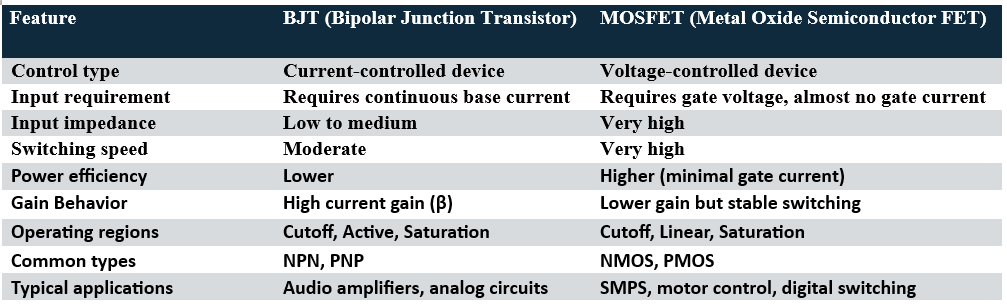
MOSFET vs BJT:
MOSFETs are voltage-controlled, faster, and more efficient for high-speed switching, while BJTs offer better linear amplification in some analog applications.
3. Advanced Transistor Technologies
Modern chips use advanced designs such as CMOS technology, FinFET transistor technology, and experimental quantum dot transistors. These designs reduce power consumption while increasing transistor density in integrated circuits.
Transistor as a Switch and Amplifier
A transistor as a switch circuit is common in microcontrollers, relays, and digital logic. When driven into saturation, the transistor acts like a closed switch; when cut off, it behaves like an open switch.
In contrast, a transistor amplifier operates in the active region. A classic example is the common emitter amplifier, widely taught in electronics courses because it provides good voltage gain and clear signal behavior.
Understanding Transistor Datasheets
A transistor datasheet provides critical parameters such as maximum voltage, current ratings, power dissipation, and transistor packaging types (TO-92, TO-220, SMD). Learning how to read datasheets helps you choose the right transistor for your project, whether it’s audio amplification or power switching.
How to Test a Transistor with a Multimeter
One common beginner question is how to test a transistor with a multimeter. By checking junction resistance between transistor terminals, you can identify faulty BJTs and confirm whether a transistor is working properly. This simple test is essential for troubleshooting real circuits.
Why Are Transistors Important in Computers?
Modern CPUs contain billions of transistors, each acting as a microscopic switch. The ability to pack more transistors into a chip directly affects performance, power efficiency, and computing speed. This is why transistors are central to CPU technology and digital innovation.
Transistor vs Vacuum Tube Comparison
Compared to vacuum tubes, transistors are:
- Smaller and lighter
- More energy-efficient
- Highly reliable
- Suitable for mass production
This comparison explains why transistors completely replaced vacuum tubes in most applications, except niche audio equipment.
Power Transistor Applications
Power transistors, including MOSFETs and IGBTs, are used in motor drives, power supplies, inverters, and renewable energy systems. Understanding MOSFET vs IGBT differences is essential for designing high-power electronic systems.
Future of Transistor Technology
As traditional scaling reaches physical limits, engineers explore FinFETs, 3D transistors, and quantum dot transistor technology. These innovations aim to continue performance improvements while reducing energy consumption, shaping the future of semiconductor technology.
Final Thoughts
From the invention of the first transistor to modern integrated circuits, transistors have transformed society. Whether you are a beginner learning electronics or an engineer designing complex systems, understanding transistor basics unlocks the core of modern technology.