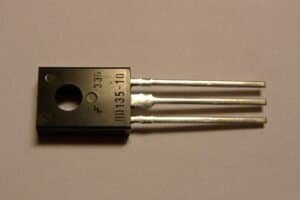

You control the signals, and a motor driver turns them into the power your motor needs to spin, stop, and change direction. A motor driver boosts low-voltage commands from your controller into the higher current and voltage that motors require, letting you manage speed, torque, and direction safely and efficiently.
Whether you build a robot, automate a device, or fix a gadget, knowing which driver fits your motor and how it protects the system saves time and prevents damage. Explore the common driver types, key parts, control methods, and tips for choosing and maintaining the right unit so your project runs reliably.
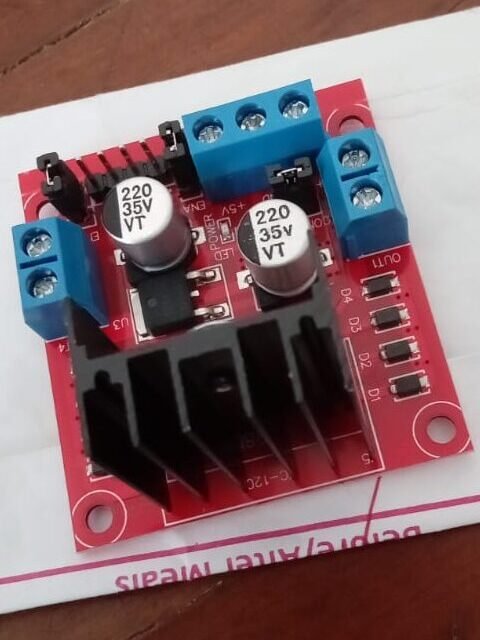
Key Takeaways
- Motor drivers convert control signals into the power needed for motor movement.
- Different driver designs match specific motor needs and control methods.
- Proper selection and maintenance keep motors safe and working well.
Types of Motor Drivers
You will find drivers that match different motor types, power levels, and control needs. Each driver style handles power switching, protection, and the control signals you send in distinct ways.
Brushed DC Motor Drivers
Brushed DC drivers switch current through the motor’s coils using transistors or H-bridges. You control speed by applying PWM (pulse-width modulation) to adjust average voltage. Direction reversals require an H-bridge or similar arrangement to flip polarity.
Look for these features when picking one:
- Current rating that matches stall and peak currents.
- Thermal and short-circuit protection to prevent damage.
- PWM frequency support to reduce noise and heating.
Brushed drivers are simple to interface with microcontrollers. They work well for battery-powered systems and low-cost actuators. Expect mechanical wear from brushes; the driver can’t prevent that but can include current sensing to help with stall detection.
Brushless DC Motor Drivers
Brushless DC (BLDC) drivers handle three-phase power and electronic commutation instead of brushes. You either use sensors (hall-effect) or sensorless back-EMF methods to time phase switching. The driver controls torque and speed by modulating phase currents with PWM and synchronous switching.
Key points to check:
- Commutation method (sensored vs sensorless) for startup reliability.
- Phase current control and MOSFET selection for efficiency.
- Regenerative braking support if you need energy recovery.
BLDC drivers are common in drones, e-bikes, and HVAC fans. They give higher efficiency and longer motor life than brushed motors but require more complex control and power electronics.
Stepper Motor Drivers
Stepper drivers move the motor in precise discrete steps by energizing coils in sequence. You control position and speed by sending step pulses and a direction signal. Microstepping drivers split full steps into smaller pulses for smoother motion and higher resolution.
Important features for stepper drivers:
- Current limiting via chopper control to protect coils.
- Microstepping modes for reduced vibration and improved accuracy.
- Hold torque and decay modes which affect heat and torque at low speeds.
Use stepper drivers in printers, CNC machines, and robotics where you need open-loop position control. They can stall if you command too fast a motion for the torque available, so pair them with appropriate gearing or feedback if required.
Servo Motor Drivers
Servo drivers manage motors with closed-loop feedback, typically using position or velocity sensors. You send a position or velocity command; the driver compares it to feedback and adjusts motor current via a control loop (often PID). Servo systems use DC, BLDC, or AC motors depending on the application.
Check these aspects when selecting a servo driver:
- Feedback type (encoder, resolver) and resolution for accuracy.
- Control loop tuning and available PID parameters.
- Peak torque and continuous current ratings to match load demands.
Servos excel where precise, dynamic control matters, such as robotics arms, CNC axes, and industrial automation. The driver’s safety features, like overcurrent and position limits, protect both the motor and your machine.
Key Components of Motor Drivers
These parts determine how well a motor driver controls speed, direction, and safety. You’ll see how switching, timing, sensing, and power management work together to move a motor precisely and protect the system.
H-Bridge Circuits
An H-bridge lets you reverse motor direction by switching which terminal gets positive or negative voltage. It uses four switches—usually MOSFETs or transistors—arranged in an H pattern so current can flow either way through the motor.
You must watch for shoot-through, which happens if two switches on the same side turn on together. Designers add dead-time and gate-drive timing to prevent that. Use complementary MOSFET pairs for efficiency and low heat.
H-bridges also affect braking and coasting modes. Shorting the motor terminals via switches creates dynamic braking. Letting them float allows coasting. Pick an H-bridge rated for your motor’s current, voltage, and switching speed to avoid failures.
Pulse Width Modulation (PWM) Control
PWM controls motor speed by switching the motor voltage on and off rapidly. You set a duty cycle—the percent of time the voltage is on—to change average power without altering supply voltage.
You need a PWM frequency high enough to avoid audible noise, typically above several kilohertz for small DC motors. Higher frequency reduces torque ripple but can increase switching losses and heat in transistors.
Use dead-time and synchronized gate signals when PWM drives an H-bridge to prevent short circuits. Many drivers provide built-in PWM generators or accept PWM from your microcontroller. Filtered PWM can smooth current for gearmotors or precision applications.
Current Sensing
Current sensing tells you how much current the motor draws so you can detect stalls, overloads, or torque changes. Common methods include low-value shunt resistors, Hall-effect sensors, and sense MOSFETs.
Shunt resistors are simple and cheap; you measure the voltage drop across the resistor. Hall sensors provide isolation and work well at higher currents. Place the sensor where it sees full motor current—either high-side or low-side—based on isolation and common-mode voltage needs.
Use current feedback for closed-loop torque control, overcurrent protection, and thermal management. Implement fast comparators for shutdown and ADC sampling for monitoring and logging. Calibrate sensors to keep readings accurate across temperature.
Voltage Regulation
Voltage regulation keeps the driver and control electronics within safe limits. You’ll often need both a regulated logic supply (e.g., 3.3V or 5V) and a stable motor supply capable of handling current spikes.
Use buck or linear regulators for the logic supply; buck converters give higher efficiency when stepping down large voltages. Add bulk and decoupling capacitors on the motor supply to absorb transients from switching and inductive kicks.
Include TVS diodes or snubber networks across motor terminals to clamp voltage spikes. Monitor supply voltage with ADCs so your firmware can reduce PWM or shut down the motor under undervoltage or overvoltage conditions.
Motor Driver Architectures
You will choose an architecture based on power needs, control complexity, and available board space. Key options range from building with separate parts to using complete, sensor-rich chips that handle protection and feedback.
Discrete Motor Drivers
Discrete drivers use separate components like MOSFETs, gate drivers, diodes, and current sense resistors that you place and wire on your board. This gives you full control over voltage rating, current path layout, and thermal design.
You can pick high-voltage MOSFETs or low-RDS(on) parts depending on motor current and efficiency goals.
You must design gate drive timing, dead-time, and protection features such as overcurrent and desaturation detection yourself. Layout matters: keep high-current traces short and use a solid ground plane to reduce noise and heating.
Discrete designs scale well for custom, high-power systems but require more engineering time and testing.
Integrated Motor Driver ICs
Integrated motor driver ICs combine MOSFETs, gate drivers, and protection into a single package. They simplify layout and save space, which helps when you need a compact motor controller for a robot or appliance.
These ICs often include thermal shutdown, overcurrent trips, and undervoltage lockout to protect your motor and board.
You still need to manage power routing, heat dissipation, and decoupling capacitors. Read the IC datasheet for recommended PCB layout, current limits, and switching frequency. Integrated parts limit how much you can tweak the power stage, but they speed development and reduce assembly complexity.
Smart Motor Drivers
Smart drivers add microcontroller interfaces, on-chip sensors, and control features like field-oriented control (FOC), stall detection, and braking. You interact with them via SPI, I2C, PWM, or step/dir signals to tune speed, torque, and safety modes.
They can offload complex algorithms from your host CPU and provide telemetry such as current, temperature, and encoder feedback.
Smart drivers suit applications where precise control and diagnostics matter, like drones, e-bikes, or industrial motion systems. They often include firmware options and configurable parameters, so you must evaluate software support, update paths, and how the driver integrates with your control system.
Controlling Methods for Motor Drivers
You’ll learn the practical ways to control motor drivers and which method fits your needs: simple analog signals, precise digital commands, or flexible microcontroller-based schemes. Each method shows how you set speed, direction, and safety limits.
Analog Control
Analog control uses continuous voltage or current to drive motor speed and direction. You apply a variable voltage (often 0–10V or 0–5V) or a variable current to an input pin, and the driver varies motor power accordingly. This method suits simple systems like basic fans or pumps where precise feedback isn’t required.
Key points to check:
- Signal range and input impedance.
- Noise filtering needs (use capacitors or RC filters).
- Safety thresholds and fault detection.
Analog lacks built-in position or speed regulation. If you need closed-loop control, combine analog input with an external feedback sensor and an amplifier or PID controller.
Digital Control
Digital control sends discrete signals or encoded commands to set motor states. You can use PWM signals for speed and separate logic lines for direction and enable/disable. PWM frequency choice matters: higher frequencies reduce audible noise but increase switching losses.
Useful options:
- PWM duty cycle for speed control.
- Direction bit for H-bridge drivers.
- Fault and status pins for diagnostics.
Digital control gives repeatable results and integrates easily into PLCs and industrial systems. It still needs current limiting and thermal protection at the driver level.
Microcontroller-Based Control
Microcontroller-based control gives the most flexibility for advanced tasks like closed-loop speed, position control, and motion profiles. You program the MCU to read sensors (encoders, tachometers, current shunts), run control algorithms (PID, feedforward), and output PWM or serial commands to the driver.
Typical setup:
- ADC for analog sensors and current sensing.
- Timers/PWM modules for precise switching.
- Encoder interfaces and communication (SPI, UART, I2C).
This approach needs attention to real-time timing, EMI mitigation, and proper grounding. It also allows safety features like overcurrent shutoff, dynamic braking, and soft-start routines that you can tune in software.
Applications of Motor Drivers
Motor drivers let you control speed, direction, torque, and braking for many types of motors. They protect your motor and electronics while translating low-power signals into the high current and voltage your motor needs.
Industrial Automation
In factories you use motor drivers to run conveyor belts, robotic arms, pumps, and fans. Choose drivers rated for higher currents and voltages, with thermal and overcurrent protection, to avoid downtime and equipment damage.
You often need closed-loop control for precise position or speed. Look for drivers that accept encoder feedback or current sensing so you can implement PID control and detect stalls or overloads quickly.
Many industrial systems need networked control. Select drivers with fieldbus, industrial Ethernet, or standard interfaces so you can integrate them into PLCs, HMIs, or SCADA systems.
Robotics
Robots depend on motor drivers for smooth motion and fast response. Use drivers that support microstepping for stepper motors or PWM with current regulation for DC and BLDC motors to get fine speed and torque control.
Battery-powered robots require drivers with high efficiency and regenerative braking to extend runtime. Also prefer drivers with fault reporting and thermal monitoring so you can protect the motors during repetitive tasks.
For mobile robots and manipulators, pick drivers that handle dynamic loads and rapid direction changes. Drivers that accept real-time commands and provide position or current feedback make closed-loop control simpler.
Consumer Electronics
In consumer devices you find motor drivers in printers, drones, washing machines, and electric toothbrushes. These applications favor small, low-cost drivers that still offer current limiting and short-circuit protection.
Noise and heat matter in consumer products. Choose drivers with quiet switching, proper thermal design, and sleep modes to cut power when the motor is idle.
For devices that interact with users, like cameras or toys, drivers that support smooth start/stop, soft braking, and simple serial or PWM control give you better user experience without complex firmware.
Selecting the Right Motor Driver
You need a driver that matches the motor, power source, and operating environment. Focus on the motor’s torque and speed needs, the voltage/current and thermal limits, and the conditions where the motor will run.
Load Requirements
Identify the motor type first: brushed DC, brushless DC (BLDC), stepper, or servo. Each needs a different control method. For example, BLDC motors require a driver with proper commutation and multiple-phase outputs, while stepper motors need microstepping and current regulation.
Calculate mechanical load in torque (N·m or oz·in) and required speed (RPM). Use peak and continuous torque values to size the driver. Make a short list of expected loads: startup stall torque, worst-case continuous torque, and transient spikes. Match driver features like current limiting, stall detection, and torque control to those needs.
Consider control interface too. Do you need PWM speed control, direction inputs, step/dir signals, or closed-loop feedback from encoders? Choose a driver that supports the control signals you will use and any protection features that prevent load-induced faults.
Power Ratings
Check voltage range and current capacity of the driver against your battery or supply. Ensure the driver’s maximum voltage rating exceeds your system by a safe margin (typically 10–20%). Match continuous current rating to your motor’s continuous current, and ensure peak current rating covers short bursts like startup or stalls.
Look at thermal limits and cooling options. Drivers rated for a given current often assume a specific ambient temperature and heatsinking. If your use has long runs or high duty cycles, pick a driver with higher current rating or add forced cooling.
Review efficiency and power loss specs. Lower loss reduces heat and extends battery life. Also confirm protection features: overcurrent, overvoltage, undervoltage lockout, and thermal shutdown. These protect the power stage and your wiring.
Environmental Considerations
Decide where the motor will operate: indoors, outdoors, under dust, or with moisture. Select driver packaging and IP rating that match the environment. For corrosive or wet conditions, choose conformal coating or IP65+ enclosures.
Temperature range matters. Check driver specs for operating and storage temperatures. If you expect high ambient heat, derate current ratings or add cooling. For cold starts, verify component behavior at low temperatures and any required warm-up routines.
Account for vibration and shock. Industrial or mobile applications need drivers with robust mounting and connectors rated for mechanical stress. Finally, plan for EMI and electrical noise. Use drivers with proper filtering, and place them away from sensitive electronics, or add ferrites and shields to meet EMC requirements.
Troubleshooting and Maintenance of Motor Drivers
You will find steps to spot common failures, keep the driver running longer, and follow key safety rules. Focus on measurable checks, routine cleaning, and safe procedures when you work on drivers.
Common Issues
You may see drivers fail due to power problems, overheating, wiring errors, or firmware/configuration mistakes. Check supply voltages with a meter first; look for dips, spikes, or missing phases. Inspect connectors and terminals for loose screws, corrosion, or frayed wires.
Thermal issues show as heat discoloration, reduced torque, or thermal trips. Measure case and heatsink temperature under load and compare to the driver’s rated maximum. Overheating often stems from poor ventilation, blocked airflow, or undersized heatsinks.
Electrical noise and grounding faults cause erratic motion and false fault lights. Confirm a single-point chassis ground and use shielded motor and encoder cables. For digital errors, review fault codes and cross-check with the driver manual before replacing parts.
Preventive Maintenance
Set a regular schedule: monthly visual checks, quarterly electrical tests, and annual firmware review. Clean dust from fans, vents, and heatsinks using low-pressure air to keep thermal resistance low. Replace filters or worn fans when vibration or reduced airflow appears.
Inspect cabling periodically for insulation wear, correct bends, and secure strain reliefs. Tighten terminal screws to specified torques to avoid intermittent contact. Verify supply filters and surge protection devices are functioning and rated for your line conditions.
Keep a maintenance log that records temperatures, fault occurrences, firmware versions, and corrective actions. This log helps you spot trends like rising operating temperature or repeated overcurrent faults before they cause failure.
Safety Guidelines
Always de-energize and lock out the power source before touching wiring or components. Confirm bulk capacitors are discharged; use a meter to verify voltage is near zero after the prescribed bleed time. Wear insulated gloves and eye protection when you open enclosures.
Use a proper grounding strap when handling sensitive driver PCBs to avoid ESD damage. When testing under power, keep clear of moving parts and use remote measurement tools where possible. Follow the driver manufacturer’s torque specs and wiring diagrams to avoid hazards from loose connections or miswiring.
Label all panels and interlocks clearly. If a fault indicates insulation breakdown or smoke, stop the system immediately and escalate to qualified repair personnel.